
More Than a Paycheck: What It Takes to Get Ahead
Two days before my brother’s 10th birthday, my family was on the brink of bankruptcy. My parents’ small business hadn’t hit its growth…
Chicago thrives when people can invest in their ideas and in the communities they call home. Strong and stable neighborhoods depend on entrepreneurs having opportunities to start, sustain and grow businesses that create jobs and strengthen local economies.


The Chicago Community Trust works to promote long-term economic vitality by strengthening neighborhood businesses. Through programs, policies and partnerships, the Trust expands access to capital, technical assistance, procurement opportunities, and other resources that help small businesses grow, create jobs, and contribute to thriving communities.
Two days before my brother’s 10th birthday, my family was on the brink of bankruptcy. My parents’ small business hadn’t hit its growth…
Small businesses are essential to stabilizing neighborhood economies. They create jobs, activate commercial corridors, and provide the goods and services that help communities…
Across many parts of Chicago, vibrant commercial corridors are key contributors to neighborhood vitality, providing jobs, essential goods and services, and places where…
We envision a Chicago region where entrepreneurs have the opportunity to build financially sustainable businesses, create local jobs, and contribute to vibrant neighborhood economies.
Achieving this vision requires sustained investment, strong partnerships, and learning alongside communities. The Trust draws on insights from grant recipients, partners, research, entrepreneurs, and residents to strengthen neighborhood business ecosystems and increase economic opportunity.
Neighborhood-based small businesses are powerful drivers of financial security, community stability, and local economic vitality. They help business owners build assets, create local jobs, activate commercial corridors, and foster neighborhoods where residents can remain, invest and thrive.
The Chicago region is home to approximately 687,000 small businesses, but most remain very small. Of these, 553,000 are non-employer firms and 134,000 have employees. While the number of non-employer firms grew by 2.4% annually from 2018 to 2023, employer firms grew by just 0.1% annually. Nearly half of non-employer firms earn less than $25,000 a year, underscoring the challenges business owners face in building revenue, hiring employees, and reaching sustainable scale.
Long-term business continuity is also at risk: 60% of owners plan to sell their business within a decade, yet 58% have no succession plan in place, threatening the loss of viable businesses, jobs, and locally held wealth.
Research shows that 68% of every dollar spent at a small business stays in the local economy, helping create jobs and strengthen neighborhood business districts. Yet access to capital remains one of the greatest barriers to growing neighborhood-based businesses. The Trust supports coordinated strategies that expand access to capital and strengthen neighborhood business ecosystems.
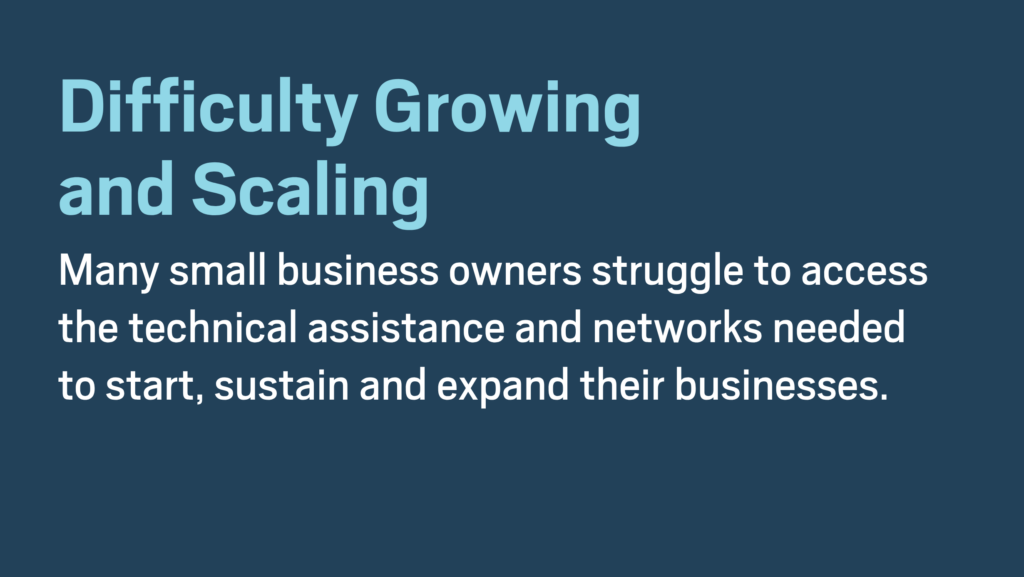
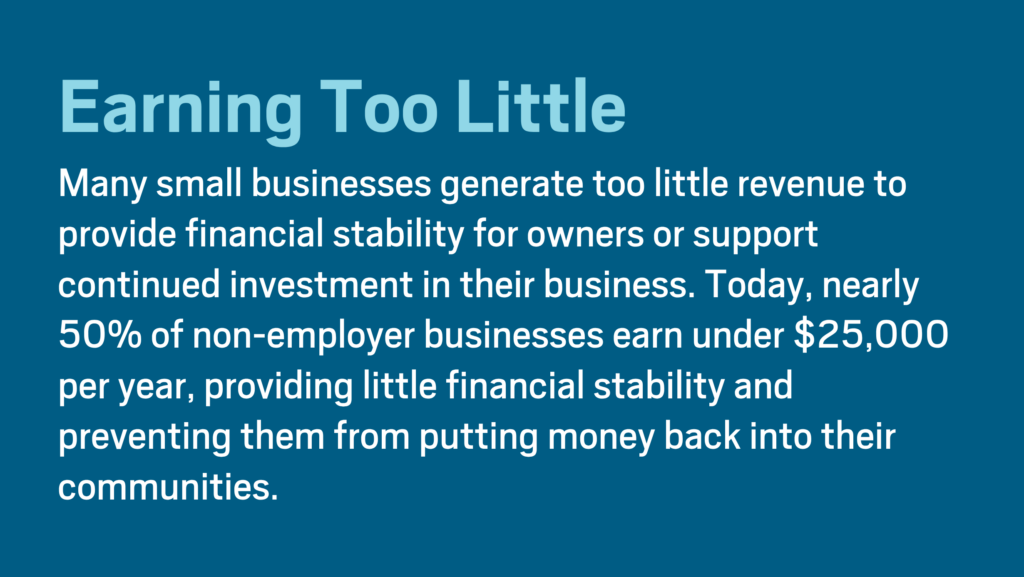
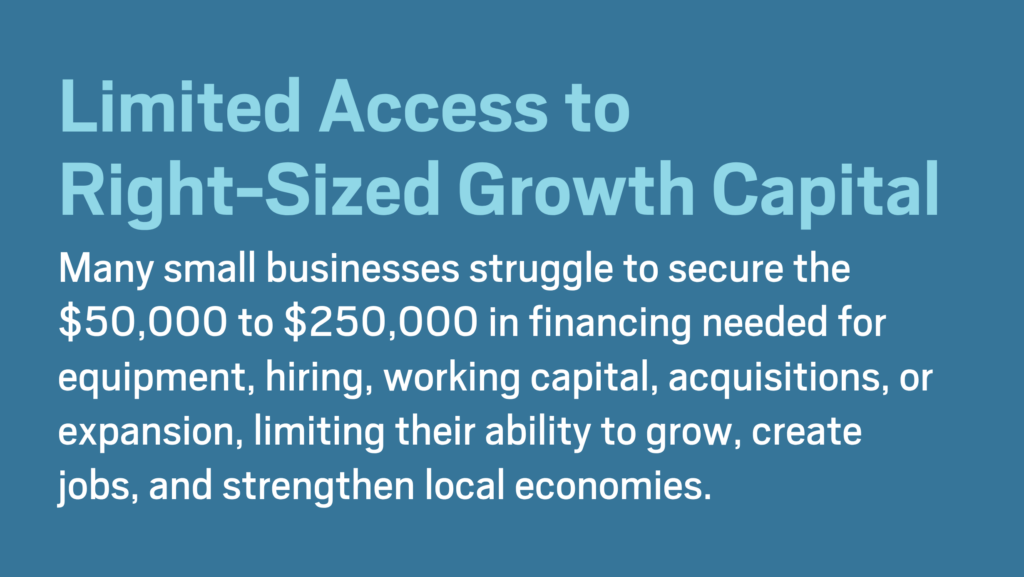
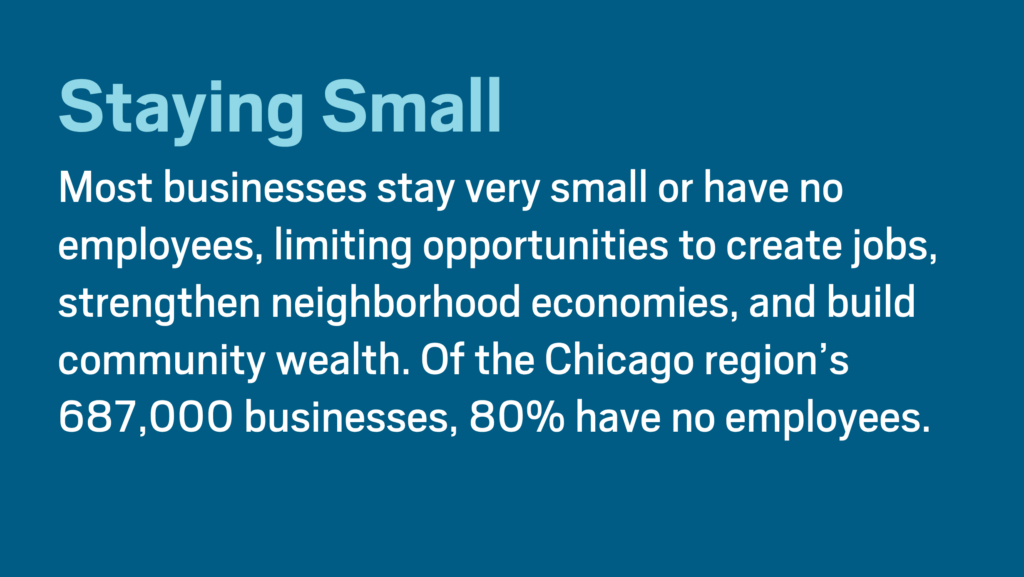


The Trust focuses on four interconnected investment areas that help neighborhood businesses move beyond survival, grow with the right support and capital, and become lasting sources of jobs, assets, and community wealth.

Expand growth-stage support through specialized programming, peer networks, professional services, market access, and operational training.

Increase access to right-sized, flexible capital for businesses ready to grow beyond microloans but unable to secure conventional financing.

Support ownership transitions through innovative business models, succession planning, technical assistance, buyer-seller connections, and acquisition financing.

Strengthen navigation and accountability by connecting entrepreneurs to trusted services, capital, procurement opportunities, and coordinated referrals.
Strengthening neighborhood business ecosystems requires collaboration across sectors. The Trust works alongside community organizations, financial institutions, employers, government agencies, philanthropy, and civic partners to support entrepreneurs, build community wealth, and promote long-term economic vitality.
The Trust collaborates with a wide range of external partners, including community organizations, local government, and civic and corporate leaders, on ways we can work together or alongside one another to help increase wealth, opportunities and well-being for every Chicagoan.
Here are opportunities to engage:
Senior Director of Homeownership & Small Business

Program Manager for Income & Small Business